

Receiving notice that your university case will proceed to a Title IX hearing can be intimidating. The hearing is often the first time the decision-maker evaluates the evidence in a structured setting, but it is not a criminal trial. The rules, deadlines, and available protections come from the university's Title IX policy and student conduct code, and those procedures can differ from one Texas campus to another.
Understanding the basic sequence helps you prepare without losing sight of what matters: presenting a clear account, testing the evidence fairly, and protecting your rights throughout the process.
What Happens Before the Hearing
Before a hearing is scheduled, the Title IX Coordinator or investigator typically provides written notice of the allegations and gathers information from the parties and witnesses. The investigation may include interviews, text messages, photographs, records, and other relevant evidence. In many policies, both parties receive an opportunity to review the collected evidence and respond before an investigative report is finalized.
The final report or evidence file becomes the foundation for the hearing. Read it carefully with your advisor. Look for factual errors, missing context, inconsistent accounts, and evidence that supports your position. You should also review the hearing notice, the policy sections at issue, the hearing format, deadlines for submitting materials, and any instructions about witnesses or exhibits.
Texas universities generally publish their own Title IX and student-conduct procedures, sometimes alongside system-level rules. Do not assume that a process used at one school will be identical at another. A policy may address remote participation, accommodations, the order of questioning, technology requirements, and the grounds and deadline for an appeal.
Who Participates in a Title IX Hearing?
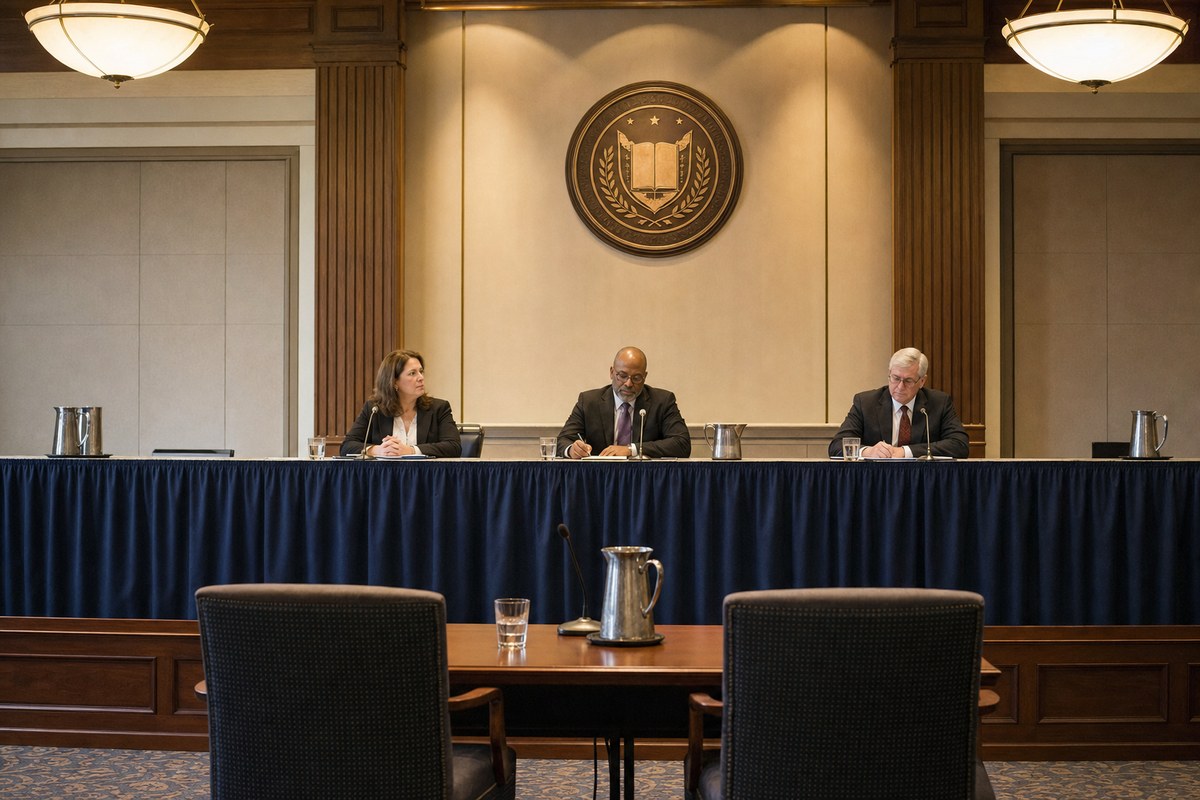
A hearing may include a decision-maker or hearing panel, the complainant, the respondent, each party's advisor, a hearing administrator, and witnesses. Some hearings are held in person; others use videoconferencing or separate rooms so the parties do not have to sit together.
Every party generally has the right to an advisor of choice. An advisor may be an attorney, a parent, a friend, or another person permitted by the school's policy. The advisor's role is important, but it is limited: the student usually must answer questions personally, while the advisor may provide quiet support and conduct questioning when the policy allows it. If a student appears without an advisor for a hearing that requires advisor-led questioning, the school may provide one, but that does not give the student the same preparation as having an experienced advisor involved early.
How Questioning and Cross-Examination Work
In a live hearing, the decision-maker may ask questions about the allegations and the evidence. The parties and witnesses may also be questioned through their advisors, subject to the school's rules. Questions generally must be relevant to the allegations and may be excluded when they seek information that is not relevant or is protected by a recognized privilege or privacy rule.
The goal is not to argue with the other party or repeat every disagreement in the record. Effective questioning focuses on specific facts: what a witness personally observed, when an event occurred, whether a statement is consistent with earlier evidence, and what the documents actually show. Your advisor should understand the policy's relevance standards and be prepared to explain why a question matters if the decision-maker excludes it.
Stay calm and answer truthfully. If you do not remember, say so rather than guessing. Listen to the entire question before responding, and ask for clarification when necessary. Avoid interruptions, sarcasm, speculation, or direct contact with the complainant. A no-contact directive or other interim measure remains important during the hearing process.
The Decision, Sanctions, and Appeal
After considering the evidence and hearing responses, the decision-maker issues a written determination. The decision explains whether the policy was violated and the reasoning supporting the conclusion. Many university policies use the preponderance-of-the-evidence standard, meaning the decision-maker must determine that a violation was more likely than not. Confirm the standard in your school's policy rather than relying on assumptions.
If responsibility is found, the university may impose sanctions under its code, which can include educational requirements, restrictions, suspension, or expulsion. The impact of a sanction can extend beyond the current semester, affecting housing, athletics, academic progress, or a professional program. The sanction phase and the appeal process are often governed by separate deadlines.
Appeals are usually limited to grounds identified in the policy, such as a procedural error, significant new evidence, a conflict of interest or bias, or a sanction that is disproportionate under the school's rules. Appeal windows can be short. Preserve the decision, hearing materials, and correspondence, and have an attorney review the policy and record promptly.
Preparing Without Facing It Alone
Good preparation is more than writing a speech. It means building a reliable timeline, reviewing the evidence, identifying the points that truly matter, practicing clear answers, and understanding exactly what your advisor may do at the hearing. It also means considering how statements in a university case could affect a related criminal or professional matter.
If you or your student is preparing for a Title IX hearing at a Texas university or another school, Howard Lotspeich Alexander & Williams, PLLC can help you understand the applicable procedure, prepare for questioning, and protect your interests. Contact Luke Williams or Jason Howard for a consultation about your situation.