

Title IX Attorney for College Students
The Complete Guide to University Title IX Investigations, Hearings, and Appeals
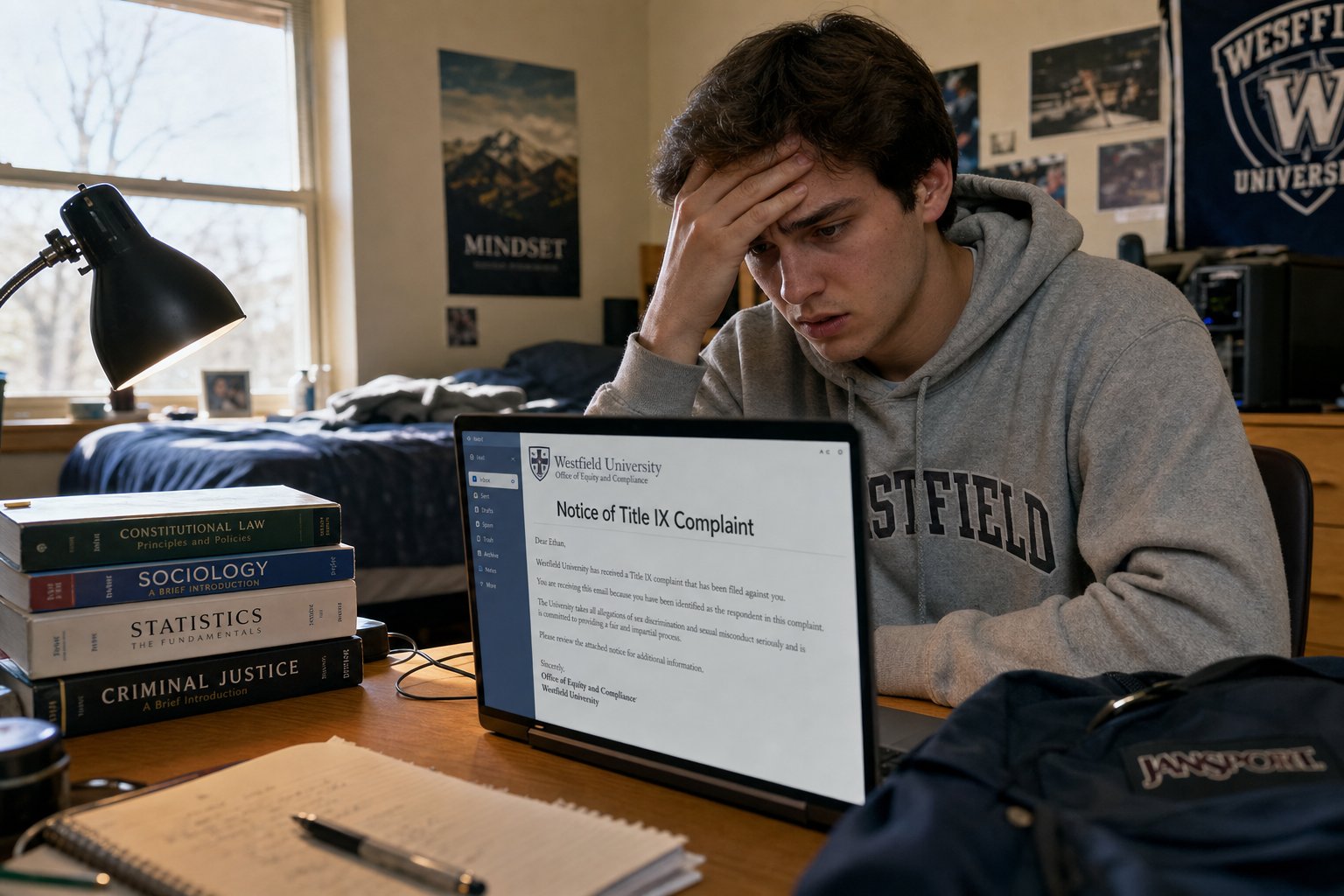
When Your Education, Reputation, and Future Are on the Line, Experience Matters.
Receiving notice that you are involved in a Title IX investigation can be one of the most stressful moments of your college career.
Whether you are a student responding to allegations or a student who has reported misconduct, the process often feels unfamiliar, confusing, and overwhelming. Deadlines arrive quickly. University procedures can be difficult to understand. Every email from the Title IX office seems to raise new questions.
Many students wonder:
- Should I hire an attorney?
- What exactly happens during a Title IX investigation?
- Can my lawyer attend meetings?
- What evidence should I provide?
- How does the hearing work?
- What happens if I'm found responsible?
- Can this affect graduate school or future employment?
These are important questions—and the answers often depend on your university's policies and the facts of your case.
At Howard Lotspeich Alexander & Williams, PLLC, we represent college and university students throughout Texas and nationwide as attorney advisors during Title IX investigations, hearings, and appeals. Our role is not simply to explain university procedures. It is to help students understand their options, prepare thoughtfully, and navigate a process that may significantly affect their academic and professional future.
If you only read one section, start here.
- A Title IX investigation is an administrative university process—not a criminal trial.
- Receiving a Notice of Allegations does not mean the university has determined that a policy violation occurred.
- Most colleges allow students to choose an advisor, and many permit that advisor to be an attorney.
- Important decisions often occur before the hearing ever begins.
- Preparing early can help students identify evidence, preserve important information, and understand university procedures.
- Every institution has its own Title IX policy, making school-specific guidance especially important.
Jump to a Section
Executive Summary
A university Title IX investigation is unlike almost any other legal or administrative proceeding most students have ever experienced.
It often moves quickly. The rules differ from one university to another. The terminology is unfamiliar. At the same time, the consequences can be significant, affecting housing, athletics, scholarships, student organizations, graduate school opportunities, and future employment.
Many students assume they should wait until a hearing is scheduled before speaking with an attorney.
In our experience, some of the most important decisions happen much earlier.
Students frequently need to decide:
- how to respond to the initial notice,
- whether to participate in interviews,
- what evidence to submit,
- who should serve as witnesses,
- how to organize communications,
- how to prepare for meetings with investigators,
- how university policies apply to their circumstances.
This guide explains each stage of the Title IX process and discusses how an experienced attorney advisor can help students navigate university investigations with confidence and clarity.
What Is Title IX?
Title IX is a federal civil rights law enacted in 1972 that prohibits sex discrimination in education programs and activities receiving federal financial assistance. Over time, the law has become a framework for addressing allegations of sex-based misconduct, including sexual harassment, sexual assault, dating violence, domestic violence, stalking, and other forms of sex-based discrimination in educational settings.
Most colleges and universities maintain Title IX offices responsible for receiving reports, implementing supportive measures, conducting investigations, and coordinating institutional responses under applicable law and school policy.
It is important to understand that Title IX proceedings are administrative—not criminal.
A university may conduct its own investigation even if:
- no police report is filed,
- law enforcement declines to investigate,
- criminal charges are never brought,
- criminal charges are dismissed, or
- a criminal case reaches a different outcome.
Because the university is applying its own policies rather than criminal law, the process, procedures, and potential outcomes are different from those found in a courtroom.
Why Students Search for a Title IX Attorney
Most people do not wake up one morning and search for a Title IX attorney out of curiosity.
They search because something serious has happened.
Perhaps they have just received an email with the subject line: Notice of Allegations
Or perhaps they have been asked to attend an investigative interview.
Parents may receive a call from a son or daughter saying: "I don't know what to do."
In our experience, students often begin searching for legal guidance at one of five critical moments:
They Receive a Notice of Allegations
The university has informed the student that a report has been made and that an investigation is beginning. Questions immediately arise about deadlines, interviews, evidence, and next steps.
They Learn They May Bring an Advisor
Many university notices explain that students have the right to an "advisor of their choice." For families unfamiliar with Title IX procedures, this is often the first indication that legal representation may be available.
An Investigation Is Already Underway
Students sometimes realize that interviews, witness statements, or document requests are becoming more complex than expected. They begin looking for someone who understands university procedures and can help them navigate the process.
A Hearing Has Been Scheduled
By this stage, students often recognize the seriousness of the proceedings. Preparation becomes especially important as they review evidence, organize exhibits, and prepare to present their position under the university's hearing procedures.
A Decision Has Been Issued
Some students seek legal guidance after receiving a decision to better understand appeal options available under university policy.
One of the most common misconceptions we encounter is the belief that students should wait until the hearing to seek legal guidance.
In reality, many of the decisions that shape a Title IX case happen long before anyone enters a hearing room. Identifying relevant witnesses, preserving communications, organizing timelines, and understanding university procedures often begin during the earliest stages of the investigation. Taking time to understand the process before responding can help students make informed decisions throughout the case.
What Does a Title IX Attorney Actually Do?
One of the biggest misconceptions about Title IX proceedings is that an attorney simply attends a hearing.
In reality, the hearing is often only one part of a much larger process.
An experienced Title IX attorney may assist with:
- reviewing the university's Notice of Allegations,
- explaining institutional procedures,
- discussing the student's goals,
- preparing for investigative interviews,
- identifying and organizing relevant evidence,
- reviewing witness statements,
- preparing written responses where appropriate,
- helping the student understand hearing procedures,
- evaluating appeal options after a decision.
The exact role depends on the university's policies, the stage of the proceeding, and the student's individual circumstances.
What remains consistent is the objective: helping students navigate a high-stakes university process with a clear understanding of their rights, responsibilities, and options.
When Should You Contact a Title IX Attorney?
One of the most common questions students and parents ask is, "Should I wait to see how the investigation develops before contacting an attorney?" It's really another way of asking: when should I hire a Title IX attorney, or do I need a Title IX lawyer at all?
In many cases, the answer is no — waiting is not necessary, and often is not advisable.
While every situation is different, the earliest stages of a Title IX investigation often involve decisions that can affect the remainder of the process. By the time a hearing has been scheduled, important interviews may have already occurred, evidence may have been collected, and university deadlines may have passed.
Speaking with an experienced Title IX attorney early in the process does not mean you are preparing for a courtroom battle. Instead, it allows you to better understand your university's procedures, your rights and responsibilities, and the options available to you before making important decisions.
Situations Where Students Commonly Contact a Title IX Attorney
Whether you should hire a lawyer for a Title IX investigation often depends on where you are in the process. Students and families often seek legal guidance after one of the following events:
- Receiving a Notice of Allegations or other communication from the Title IX Office.
- Learning that they have been named as a respondent or complainant in a Title IX matter.
- Being asked to participate in an investigative interview.
- Receiving a request to submit evidence or identify witnesses.
- Learning that a hearing has been scheduled.
- Receiving a written determination or disciplinary decision.
- Considering whether to file or respond to an appeal.
Regardless of where you are in the process, understanding what to expect can help you make informed decisions moving forward.
Why Early Guidance Can Matter
Although every case is unique, students who seek guidance early often have more time to:
- Understand the university's investigation process.
- Review applicable policies and procedures.
- Preserve relevant evidence and communications.
- Organize a detailed timeline of events.
- Identify individuals who may have relevant information.
- Prepare thoughtfully for interviews and hearings.
- Understand important deadlines and procedural requirements.
Early preparation is not about changing the facts of a case. It is about ensuring that students understand the process before making decisions that may have lasting consequences.
One of the most common observations from our Title IX practice is that students frequently underestimate how much of the case develops before the hearing.
The investigation often shapes the evidence, witness information, and issues that will later be considered. Taking time to understand the process early can help students participate more confidently and avoid preventable mistakes.
You Don't Have to Wait Until a Hearing Is Scheduled
Many people assume they only need an attorney if their case reaches a formal hearing.
In reality, some of the most important decisions occur much earlier. Questions about interviews, evidence, supportive measures, university communications, and procedural deadlines often arise shortly after the investigation begins — long before anyone is asking how an attorney can help with a Title IX hearing.
Seeking legal advice early allows students and families to better understand these issues before they become more difficult to address.
A Consultation Can Provide Clarity
Even if you are unsure whether you need ongoing representation, an initial consultation can help answer important questions, including:
- How does my university's Title IX process work?
- What should I expect during the investigation?
- What role can an attorney play under my school's procedures?
- What information should I begin organizing?
- What deadlines should I be aware of?
- What are my options moving forward?
Having a clearer understanding of the process can reduce uncertainty and help students approach the investigation with greater confidence.
Contact Howard Lotspeich Alexander & Williams, PLLC
If you or your child has received notice of a Title IX investigation, you do not have to navigate the process alone.
Howard Lotspeich Alexander & Williams, PLLC represents college and university students throughout Texas and across the United States in Title IX investigations, hearings, and appeals. We work closely with students and families to explain university procedures, prepare for each stage of the process, and provide experienced guidance tailored to the facts of each case.
If you have questions about a Title IX investigation or would like to discuss your situation confidentially, contact our office to schedule a consultation.
Understanding the University Title IX Investigation Process
For many students, the most stressful part of a Title IX case is not knowing what comes next.
Unlike criminal court proceedings, every university has its own Title IX policies and procedures. While there are common stages shared by many institutions, the exact process can vary depending on the school's policies and the legal framework that applies.
Understanding those stages helps students make informed decisions rather than reacting under pressure.
The Typical Title IX Timeline
Although each university's procedures differ, many Title IX matters follow a process similar to the one below.
Step One: A Report Is Made
Every Title IX matter begins when a university receives information suggesting a possible violation of its Title IX policy or related student conduct policies.
Reports may come from:
- A student
- A faculty member
- A staff member
- Campus police
- A resident assistant
- An athletic department employee
- A third-party witness
Some reports are made immediately after an incident.
Others are reported weeks, months, or even longer afterward.
Receiving a report does not automatically mean a student has violated university policy. Instead, it begins the university's process of evaluating what, if any, next steps are appropriate under its procedures.
A report is the beginning of the process—not the conclusion. Receiving notice of an investigation does not mean the university has already reached a decision about responsibility.
Step Two: The Initial Assessment
After receiving a report, many institutions conduct an initial assessment.
During this stage, the Title IX office may evaluate issues such as:
- Whether the reported conduct falls within the school's policies.
- Whether immediate supportive measures are appropriate.
- Whether additional information is needed.
- Whether a formal investigation should proceed under applicable procedures.
In some situations, universities may contact one or both parties before a full investigation begins.
Step Three: The Notice of Allegations
For many students, this is the moment everything changes.
The email often arrives unexpectedly.
Its subject line may include language such as:
- Notice of Allegations
- Notice of Investigation
- Notice of Formal Complaint
- Notice of Hearing
- Notice of Alleged Policy Violation
Students frequently experience understandable anxiety when they receive this notice.
However, it is important to remember that the notice generally serves to inform the student that a university process is beginning—it is not a determination that a policy violation occurred.
Depending on the institution, the notice may include:
- The policies allegedly implicated.
- A summary of the reported conduct.
- The identities of involved parties, where appropriate.
- Information regarding advisor rights.
- Contact information for the investigator.
- Upcoming interview dates or deadlines.
- Information about available supportive resources.
Responding Immediately Without Understanding the Process
Many students feel pressure to send a detailed response as soon as they receive the notice.
That instinct is understandable—but taking time to carefully review the notice, understand applicable procedures, and organize relevant information often leads to more thoughtful participation in the investigation.
Every situation is different, and students should understand the university's process before making important decisions.
What Should You Do After Receiving a Notice?
Although every case is different, many students benefit from taking several practical steps early in the process.
Read Every Word Carefully
Do not skim the notice. Pay close attention to:
- Deadlines
- Interview dates
- Policy references
- Instructions regarding advisors
- Evidence submission procedures
- Any restrictions imposed by the university
Preserve Information
Avoid deleting:
- Text messages
- Emails
- Social media communications
- Photographs
- Videos
- Calendar entries
- Phone records
Start Building a Timeline
One of the most effective preparation tools is a detailed timeline. Include:
- Dates
- Times
- Locations
- Individuals present
- Communications exchanged
- Events before and after the reported incident
Identify Potential Witnesses
Consider individuals who may have relevant information—not simply those who support your position. Helpful witnesses are often people who:
- Observed interactions.
- Saw the parties before or after an event.
- Possess relevant communications.
- Can provide context about events.
Understand Your University's Policies
Every institution publishes Title IX policies and procedures. Those documents explain:
- Investigation procedures
- Advisor rights
- Hearing procedures
- Appeal rights
- Evidence rules
- Applicable definitions
Reading these materials early can make the process less intimidating.
One of the most helpful things a student can do during the first week is create a detailed timeline while memories are still fresh. Even seemingly minor details—when people arrived, where conversations occurred, or who was present—can later become important when reviewing evidence or preparing for interviews.
Understanding Supportive Measures
Students are often surprised to learn that a university may implement supportive measures during an investigation.
Supportive measures are generally intended to help preserve access to educational programs while the university process moves forward.
Depending on the circumstances, supportive measures may include:
- Academic adjustments
- Housing changes
- Schedule modifications
- Counseling referrals
- Workplace adjustments for student employees
- Mutual no-contact directives
- Other measures authorized by university policy
The availability, purpose, and implementation of supportive measures differ among institutions.
Interim Restrictions
In certain situations, universities may impose temporary restrictions while an investigation is pending.
Depending on university policy and the circumstances, these may include:
- Housing restrictions
- Restrictions from specific buildings
- Temporary removal from certain activities
- Athletic participation restrictions
- Organization participation restrictions
- Temporary administrative actions permitted by university policy
Because these measures may affect a student's education, athletics, or campus life, understanding the school's procedures and available review processes can be important.
Choosing Your Title IX Advisor
Many students first learn they may choose an advisor when reading the Notice of Allegations.
This is one of the earliest—and potentially most important—decisions they make.
A knowledgeable advisor can help explain procedures, prepare for meetings, organize evidence, and answer questions throughout the process.
While some institutions provide advisors upon request, many students choose an attorney advisor because of the legal and procedural issues that can arise during an investigation.
The advisor's permitted role varies by institution, making it important to understand the specific rules that apply at your school.
The Investigator's Role
Students sometimes assume that the investigator is either "on their side" or "against them."
In reality, the investigator's role is generally to gather relevant information and prepare materials consistent with the institution's procedures.
Investigators may:
- Conduct interviews.
- Collect documents.
- Review electronic communications.
- Gather witness statements.
- Compile evidence.
- Prepare investigative reports.
The investigator's role differs from that of an advisor or attorney, whose responsibility is to help the student understand the process and make informed decisions.
Understanding these different roles helps students approach the investigation with realistic expectations.
Preparing for Your Investigator Interview
The investigator interview is often one of the most significant stages of the process.
Preparation is not about memorizing answers.
It is about ensuring that you understand:
- The allegations being investigated.
- The questions likely to arise.
- The chronology of events.
- The available evidence.
- Relevant witnesses.
- University procedures.
Thoughtful preparation can help students communicate more clearly and reduce misunderstandings.
Interview Preparation Checklist
Before your interview, consider whether you have:
- Carefully reviewed the Notice of Allegations.
- Read your university's Title IX procedures.
- Created a detailed timeline.
- Identified potential witnesses.
- Preserved relevant communications.
- Organized photographs, messages, or documents.
- Reviewed available evidence.
- Selected an advisor, if desired.
- Written down questions you have about the process.
Looking Ahead
The investigation is only one part of a Title IX matter.
After interviews and evidence collection, many institutions provide opportunities for evidence review before an investigative report is finalized. Depending on the school's procedures, the matter may then proceed to a hearing, a decision, and, in many cases, an appeal.
Understanding these later stages is just as important as preparing for the investigation itself.
What Happens After the Investigation?
Once interviews have been completed and the investigator has gathered relevant information, the case enters one of its most important stages.
Many students believe the investigation ends after they are interviewed.
In reality, significant decisions—and opportunities to participate—may still remain.
Depending on the institution's policies, the next phase often includes:
- Additional evidence collection.
- Follow-up interviews.
- Review of investigative materials.
- Preparation of an investigative report.
- A hearing, if required.
- A written determination.
- An appeal process.
Understanding these steps can help students participate more effectively throughout the remainder of the case.
Reviewing the Evidence
Many universities provide the parties with an opportunity to review evidence before the investigation is finalized.
Although procedures vary, this stage often allows students to examine the materials the investigator has gathered, such as:
- Text messages
- Emails
- Social media communications
- Photographs
- Videos
- Witness statements
- Security footage
- University records
- Interview summaries
- Other relevant documents
Reviewing these materials carefully is important because it may be the first opportunity to identify misunderstandings, missing context, or additional evidence that should be considered.
Do not assume the investigator has every relevant piece of information. If important evidence exists, it may need to be identified or submitted according to your university's procedures and deadlines.
Understanding the Investigative Report
After gathering information, many investigators prepare a written report.
Depending on the institution, that report may summarize:
- The allegations.
- The procedural history.
- The interviews conducted.
- The evidence reviewed.
- Areas of agreement.
- Areas of disagreement.
- Relevant policy provisions.
Some institutions limit the investigator's role to collecting and summarizing evidence, while others may assign additional responsibilities depending on their procedures and the governing legal framework.
The investigative report is often one of the most important documents in the case because it serves as the foundation for later stages of the process.
Students sometimes focus exclusively on preparing for the hearing and overlook the importance of the investigative record. In many cases, the hearing participants—including decision-makers—will spend significant time reviewing the investigation materials before anyone enters the hearing room. A clear, organized presentation of information throughout the investigation can make later stages of the process easier to understand.
Does Every Case Go to a Hearing?
No.
Whether a hearing occurs depends on several factors, including:
- The institution's policies.
- The applicable legal framework.
- The type of allegations.
- Whether the matter is resolved through another process permitted by university policy.
When hearings are required, they often become the most visible stage of the Title IX proceeding—but they are usually built upon everything that occurred during the investigation.
What Happens During a Title IX Hearing?
Every university conducts hearings differently.
However, many hearings include some combination of the following:
- Opening procedural instructions.
- Presentation of the investigative record.
- Questions directed to the parties.
- Questions directed to witnesses.
- Consideration of documentary evidence.
- Closing of the evidentiary portion.
- Deliberation by the decision-maker or panel.
Unlike a courtroom trial, Title IX hearings are administrative proceedings governed by institutional policies rather than traditional rules of evidence.
Typical Hearing Flow
Although the specific sequence varies by institution, many hearings generally follow a process similar to the one below.
Who Makes the Decision?
Many students assume the investigator decides the case.
That is not always true.
Depending upon the institution's procedures, responsibility may be determined by:
- A single decision-maker.
- A hearing officer.
- A hearing panel.
- Another individual or body designated by university policy.
The decision-maker's role differs from the investigator's role.
While investigators generally gather and organize information, the decision-maker is typically responsible for evaluating the evidence under the institution's applicable standards and policies.
How Do Universities Evaluate Evidence?
Unlike criminal courts, universities apply their own institutional procedures when evaluating evidence.
Decision-makers often consider:
- Consistency of statements.
- Documentary evidence.
- Witness observations.
- Electronic communications.
- Corroborating information.
- Credibility assessments.
- Relevant university policies.
No single factor necessarily determines the outcome.
Each case is evaluated based on its unique facts and the procedures established by the institution.
Understanding Credibility
Students often hear the word credibility throughout a Title IX proceeding.
Credibility is not determined by one answer or one document.
Instead, decision-makers may consider a variety of factors, including:
- Consistency over time.
- Detail provided.
- Corroborating evidence.
- Plausibility when viewed alongside other evidence.
- Reliability of supporting information.
Preparing carefully before interviews and hearings can help students present information clearly and accurately.
Common Mistakes Before a Hearing
Several recurring mistakes can make hearing preparation more difficult:
Waiting Until the Last Minute
Preparing the night before a hearing rarely provides enough time to review evidence carefully.
Failing to Review the Investigation
Students should understand what information has already been gathered before participating in the hearing.
Ignoring Deadlines
Universities often establish deadlines for submitting materials or identifying witnesses. Missing those deadlines may affect what information is considered.
Becoming Focused on One Piece of Evidence
Most cases involve multiple forms of evidence rather than a single "winning" document. Looking at the case as a whole is generally more productive.
Preparing for a Hearing
Preparation is about understanding the process—not memorizing testimony.
Students often benefit from:
- Reviewing university procedures.
- Reading the investigative report carefully.
- Organizing documents.
- Creating chronological timelines.
- Reviewing communications.
- Identifying questions they have about the process.
- Understanding the roles of hearing participants.
The more familiar students become with the process, the more confidently they can participate.
Hearing Preparation Checklist
Before a hearing, consider whether you have:
- Reviewed the investigative report.
- Organized your documents.
- Read the hearing procedures.
- Prepared your timeline.
- Reviewed communications.
- Discussed the process with your advisor.
- Identified questions regarding hearing procedures.
- Understood applicable deadlines.
Preparing for Your Title IX Hearing
This free, downloadable checklist includes:
- What to bring.
- Documents to organize.
- Questions to discuss with your advisor.
- Timeline worksheet.
- Evidence checklist.
- Witness preparation notes.
- University policy checklist.
Download our free Title IX Hearing Preparation Checklist to help organize important documents and questions before your hearing.
Potential Sanctions
If a student is found responsible under university policy, sanctions vary significantly depending on:
- The institution.
- The applicable policy.
- The nature of the findings.
- The circumstances of the case.
Possible sanctions may include:
- Educational requirements.
- Probation.
- Restrictions on activities.
- Housing changes.
- Suspension.
- Expulsion.
- Other sanctions authorized by institutional policy.
Because sanctions differ from one university to another, students should review their institution's procedures carefully.
Appeals
Many universities provide an opportunity to appeal certain decisions.
Appeals are generally limited to specific grounds established by university policy.
Common examples may include:
- Alleged procedural errors.
- Newly available evidence.
- Conflicts of interest or bias where recognized by policy.
- Other grounds identified by the institution.
An appeal is generally not a completely new investigation.
Instead, it typically focuses on whether the grounds for appeal established by university policy have been satisfied.
Respondents and Complainants: Shared Procedural Rights
Although universities establish their own procedures, many institutions provide important procedural protections to both respondents and complainants.
| Respondents | Complainants |
|---|---|
| Opportunity to review applicable evidence under institutional procedures | Opportunity to review applicable evidence under institutional procedures |
| Opportunity to select an advisor where permitted | Opportunity to select an advisor where permitted |
| Opportunity to participate in interviews | Opportunity to participate in interviews |
| Opportunity to identify witnesses | Opportunity to identify witnesses |
| Opportunity to submit relevant evidence | Opportunity to submit relevant evidence |
| Opportunity to receive the institution's determination and pursue available appeals | Opportunity to receive the institution's determination and pursue available appeals |
Because policies differ, students should always consult their university's procedures regarding the specific rights available in their case.
Looking Ahead
By this point, you should have a clearer understanding of how a Title IX matter generally progresses—from the initial report through investigation, evidence review, hearings, decisions, and appeals.
The final part of this guide will answer the questions students and families ask most often, provide practical resources, explain how to choose the right attorney, and tie together the entire process into a comprehensive resource.
Frequently Asked Questions About Title IX Attorneys and University Investigations
Students and families often have many of the same questions after learning about a Title IX investigation.
While every university has its own procedures and every case is different, the following answers address many of the issues we discuss during initial consultations.
Hiring a Title IX Attorney
Do I need a Title IX attorney?
Every case is different. Some students choose to navigate the process on their own, while others prefer to work with an attorney who can explain university procedures, review evidence, prepare for interviews and hearings, and provide legal advice throughout the process.
When should I contact a Title IX attorney?
Many students benefit from speaking with an attorney as soon as they receive a Notice of Allegations or learn that a Title IX investigation has begun.
Early guidance may help students understand university procedures, preserve important evidence, and prepare thoughtfully before participating in interviews or hearings.
Can my attorney attend meetings with me?
Many colleges and universities permit students to have an advisor of their choice during Title IX proceedings, and that advisor may often be an attorney. The advisor's role varies depending on the institution's policies and the stage of the proceeding.
Can my attorney speak for me?
That depends on your university's procedures. Some institutions permit advisors to participate more actively than others. Understanding your school's policy is an important part of preparing for the process.
Can my parents hire an attorney for me?
Yes. Parents frequently contact our office on behalf of their college-aged children. Because Title IX matters often affect a student's education and future opportunities, many families choose to seek legal guidance together.
Questions About the Investigation
Does receiving a Notice of Allegations mean I'm guilty?
No.
A Notice of Allegations generally informs a student that the university has begun a formal process. It is not a determination that a policy violation occurred.
Should I answer every question the investigator asks?
Every situation is unique. Students often benefit from understanding the process, reviewing available information, and preparing before participating in interviews.
Can I submit text messages?
Many universities consider relevant electronic communications when permitted under their procedures.
These may include:
- Text messages
- Emails
- Social media communications
- Direct messages
- Photos
- Videos
Students should review their institution's evidence procedures carefully.
Should I delete embarrassing messages?
No.
Deleting communications after learning of an investigation can create additional issues.
Preserving potentially relevant information is generally advisable.
Can witnesses submit written statements?
Many universities permit witnesses to provide information during the investigation, although procedures differ from one institution to another.
What if I forgot something during my interview?
Depending on the university's procedures and the stage of the investigation, there may be opportunities to provide additional information. Students should review applicable deadlines and procedures.
Questions About Hearings
Will there always be a hearing?
Not necessarily.
Whether a hearing occurs depends upon the institution's procedures and the applicable legal framework.
Who decides the case?
The decision-maker varies by institution.
Depending upon university policy, responsibility may be determined by:
- A hearing officer
- A hearing panel
- A designated decision-maker
- Another university official authorized by institutional policy
Are Title IX hearings open to the public?
Generally, no.
Most university Title IX proceedings are administrative processes that are not open to the public.
Can witnesses be questioned?
Many institutions provide procedures for questioning witnesses during the hearing process, although those procedures vary.
Will the investigator decide whether I violated university policy?
Not always.
At many institutions, the investigator gathers information while another individual or panel makes the final determination.
Questions About the Outcome
What sanctions can a university impose?
Sanctions differ significantly among institutions.
Possible outcomes may include:
- Educational requirements
- Probation
- Housing changes
- Suspension
- Expulsion
- Other sanctions authorized by university policy
Can I appeal?
Many universities provide an appeal process based upon specific grounds identified in their policies.
Will a Title IX finding affect graduate school?
It may.
Graduate schools often ask applicants about disciplinary history or conduct matters. Because policies differ among institutions and programs, students should carefully review application requirements.
Can a Title IX finding affect professional licensing?
Certain professions—including law, medicine, nursing, education, and other licensed fields—may ask applicants about disciplinary history. The significance of a university disciplinary matter depends on many factors, including the licensing authority's rules and the specific circumstances.
Questions From Parents
My child just called and said they received a Title IX notice. What should we do first?
Remain calm.
Encourage your student to:
- Read the notice carefully.
- Preserve all communications.
- Avoid discussing the matter publicly.
- Review the university's procedures.
- Consider speaking with an experienced Title IX attorney before important deadlines arrive.
Can parents attend interviews?
That depends upon university policy.
Some institutions permit parents to attend in certain circumstances, while others limit participation to advisors or designated individuals.
Will FERPA prevent me from receiving information?
The Family Educational Rights and Privacy Act (FERPA) generally protects a student's educational records. Depending on the student's age and circumstances, the student may need to provide written permission before the university can discuss certain information with parents.
Student Action Plan
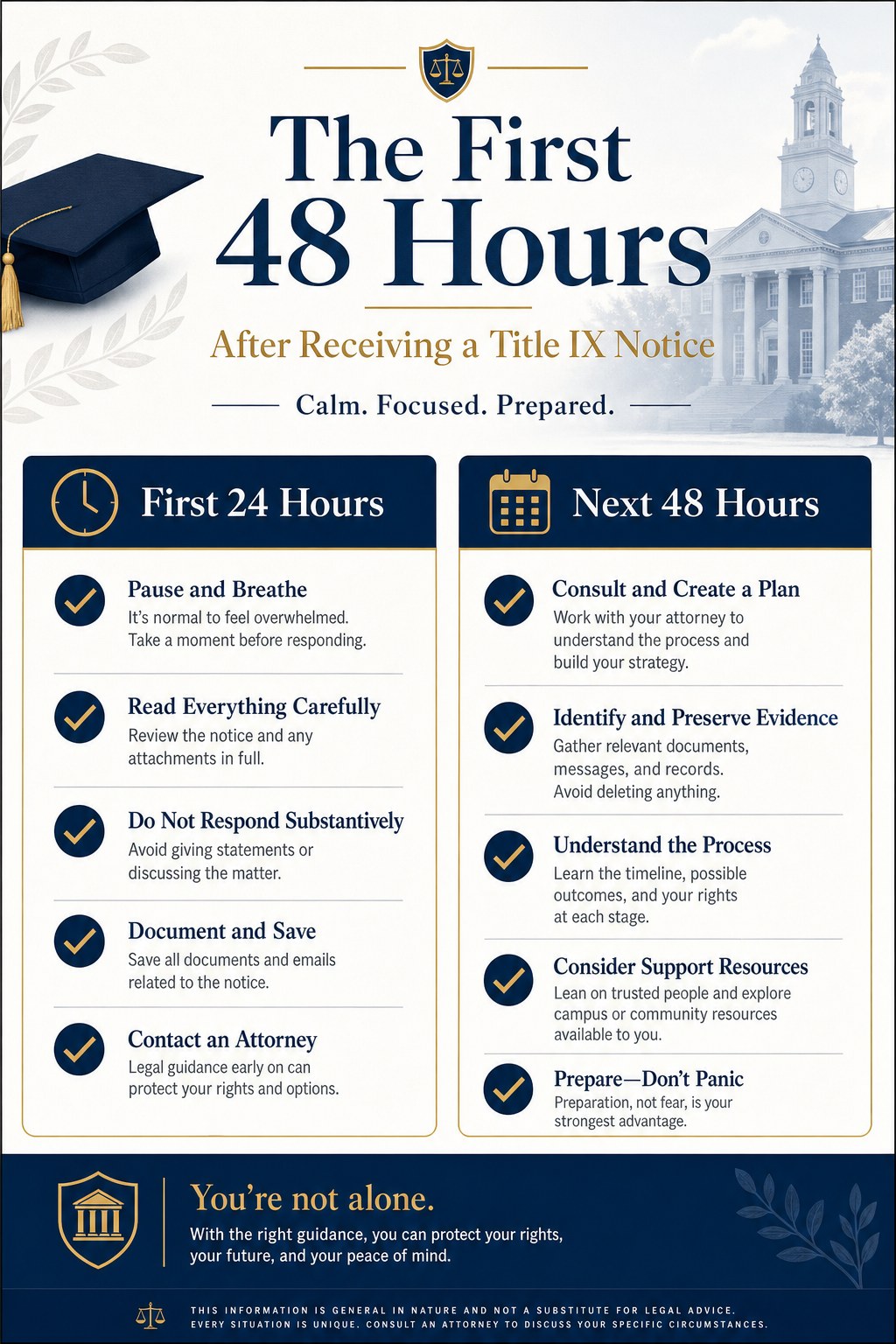
If you have just learned that you are involved in a Title IX investigation, consider taking the following practical steps:
Within the First 24 Hours
- Read the Notice of Allegations carefully.
- Save the email and all attachments.
- Calendar every deadline.
- Preserve text messages, emails, photographs, videos, and social media communications.
- Avoid deleting or altering electronic communications.
- Begin writing a timeline while events are fresh in your memory.
Within the Next 48 Hours
- Read your university's Title IX policy.
- Identify individuals who may have relevant information.
- Gather documents and communications.
- Create a dedicated folder for your case.
- Consider whether you would benefit from consulting a Title IX attorney.
Questions to Ask Before Hiring a Title IX Attorney
Choosing an attorney is an important decision. Consider asking:
- How much experience do you have with Title IX proceedings?
- Have you represented both respondents and complainants?
- Have you handled cases at my university or similar institutions?
- What role can you play under my university's procedures?
- How will we communicate throughout my case?
- How do you prepare students for interviews and hearings?
- What should I expect during the investigation?
Title IX Glossary
- Advisor
- An individual selected by a student to provide support and guidance during the Title IX process.
- Appeal
- A request for review of a university decision based on grounds established by institutional policy.
- Complainant
- The individual reported to have experienced conduct that may violate university policy.
- Decision-Maker
- The person or panel responsible for determining responsibility under university procedures.
- Evidence
- Information considered during the investigation or hearing, such as witness statements, documents, electronic communications, photographs, or videos.
- Hearing
- A stage of the university process during which evidence may be considered under institutional procedures.
- Interim Measures
- Temporary measures a university may implement during a pending investigation, consistent with its policies.
- Investigator
- The university official responsible for gathering information during the investigation.
- Notice of Allegations
- The written notice informing a student that the university has initiated a Title IX process.
- Respondent
- The individual alleged to have violated university policy.
- Supportive Measures
- Non-disciplinary services or adjustments that may be provided by the university to support access to educational programs during the Title IX process.
- Title IX Coordinator
- The university official responsible for overseeing the institution's compliance with Title IX.
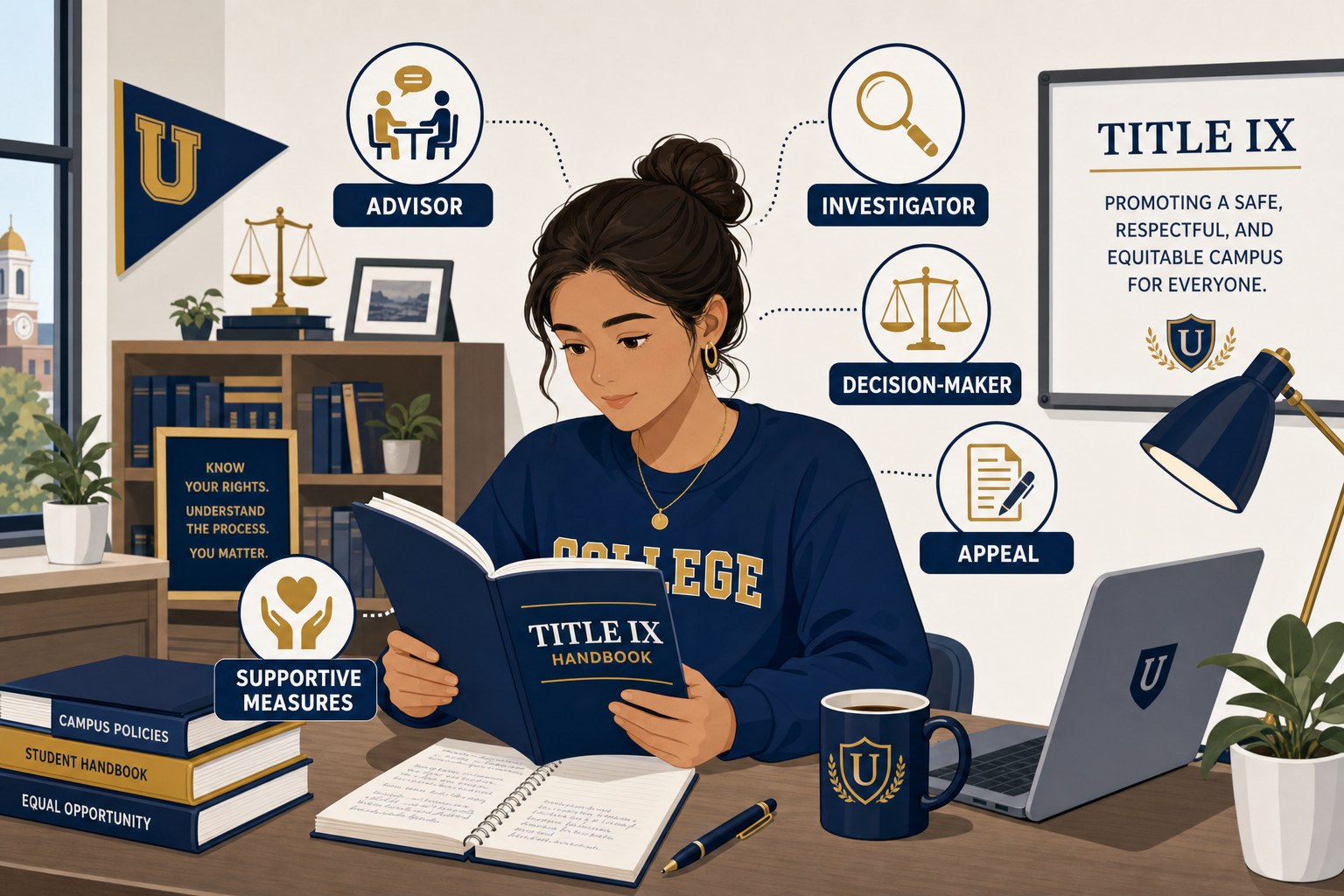
Related Resources
Continue learning about the Title IX process with these in-depth guides:
- What Is a Title IX Advisor?Read Article
- Preparing for a Title IX InvestigationRead Article
- Understanding the Title IX Hearing ProcessRead Article
- Title IX Appeals ExplainedRead Article
- Respondent Rights During a Title IX InvestigationRead Article
- Complainant Rights During a Title IX InvestigationRead Article
- A Parent's Guide to College Title IX CasesRead Article
- Common Mistakes Students Make During a Title IX InvestigationRead Article
- Texas Title IX AttorneyRead Article
- Nationwide Title IX RepresentationRead Article
About Howard Lotspeich Alexander & Williams, PLLC
Howard Lotspeich Alexander & Williams, PLLC represents college and university students in Title IX investigations, hearings, and appeals throughout Texas and across the United States.
We understand that every Title IX matter involves more than policies and procedures. It involves a student's education, reputation, and future. Our attorneys work closely with students and families to explain the process, prepare thoroughly, and provide practical guidance at every stage of the university proceeding.
Whether you are responding to allegations or reporting misconduct, we are committed to helping you navigate the process with professionalism, preparation, and personal attention.
Contact an Experienced Title IX Attorney
If you or your child has received a Notice of Allegations, been contacted by a university investigator, or has a Title IX hearing approaching, now is the time to understand your options.
The earlier you understand the process, the better prepared you can be to participate thoughtfully and confidently.
Howard Lotspeich Alexander & Williams, PLLC represents students throughout Texas and nationwide in Title IX investigations, hearings, and appeals.
Whether you are a respondent, a complainant, or a concerned parent, our attorneys are available to discuss your situation, explain the university's process, and help you determine the next appropriate steps.
Received a Notice of Allegations?
Talk to an experienced Title IX advisor before your next step. Consultations are free and confidential.